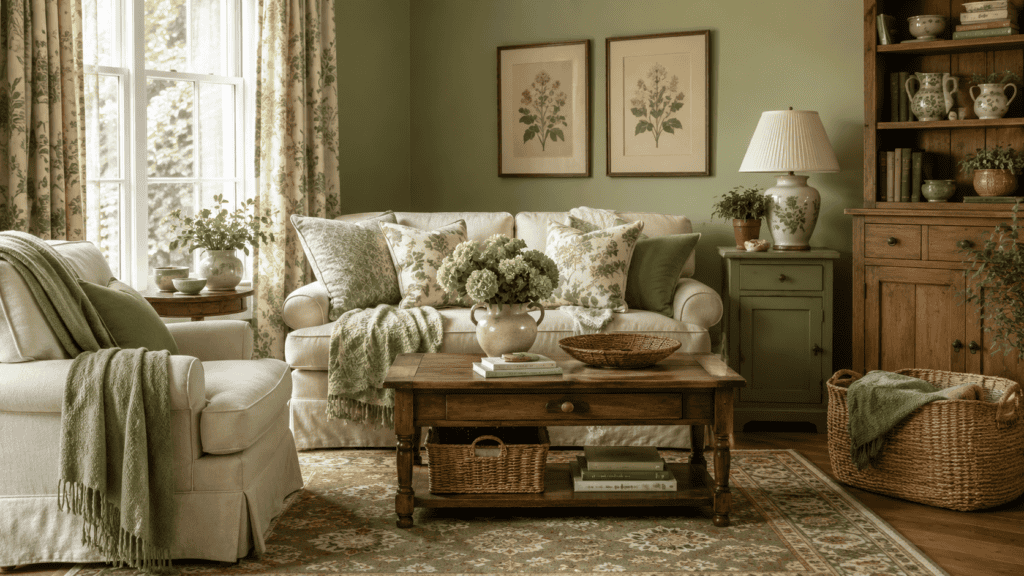
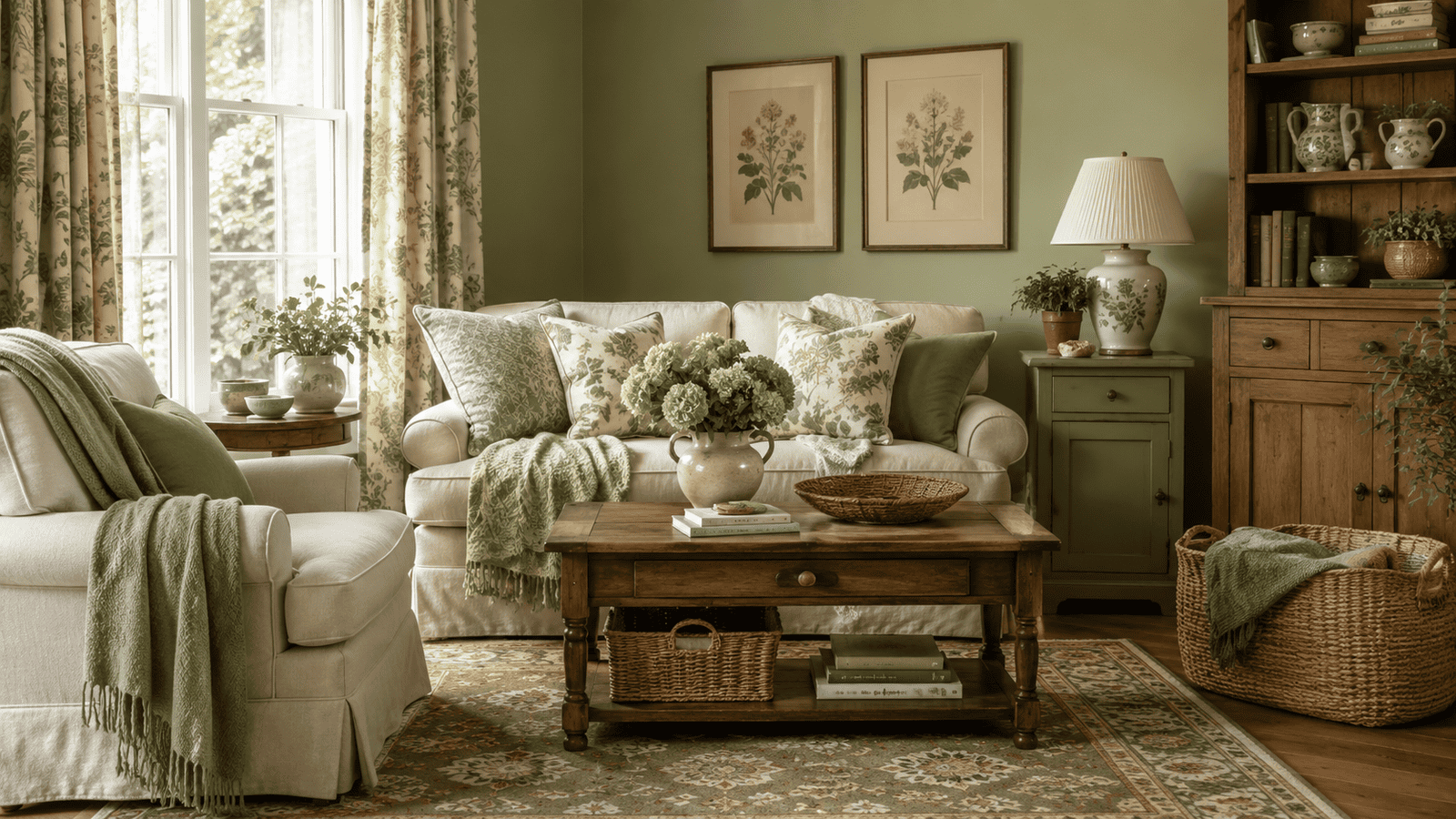
Green brings the calm of the outdoors into a room, which is why it works so beautifully in cottage-style spaces. These cozy green living room ideas use gentle color, vintage character, and comfortable layers to create rooms that feel welcoming rather than overly decorated. Whether you love painted walls or prefer a few simple accessories, there are many ways to bring this restful color into your home.
The best part is that green offers far more variety than it first appears. Soft sage feels light and peaceful, while olive adds warmth and age. Moss creates a rich, earthy mood, forest green adds depth, and muted blue-green can make a room feel fresh and collected. As a result, your green cottage living room does not have to look like anyone else’s.
Green also pairs naturally with the details that make cottage rooms feel warm. Cream upholstery, floral fabrics, warm wood, woven baskets, old books, ceramic lamps, and vintage furniture all look at home beside it. Therefore, you can use green as the main color or simply weave it into your existing cozy home decor ideas one piece at a time.
Affiliate Disclosure: This post may contain affiliate links. If you click through and make a purchase, I may earn a small commission at no extra cost to you. Thank you for supporting Cozy Charms.
1. Paint the Walls Soft Sage Green
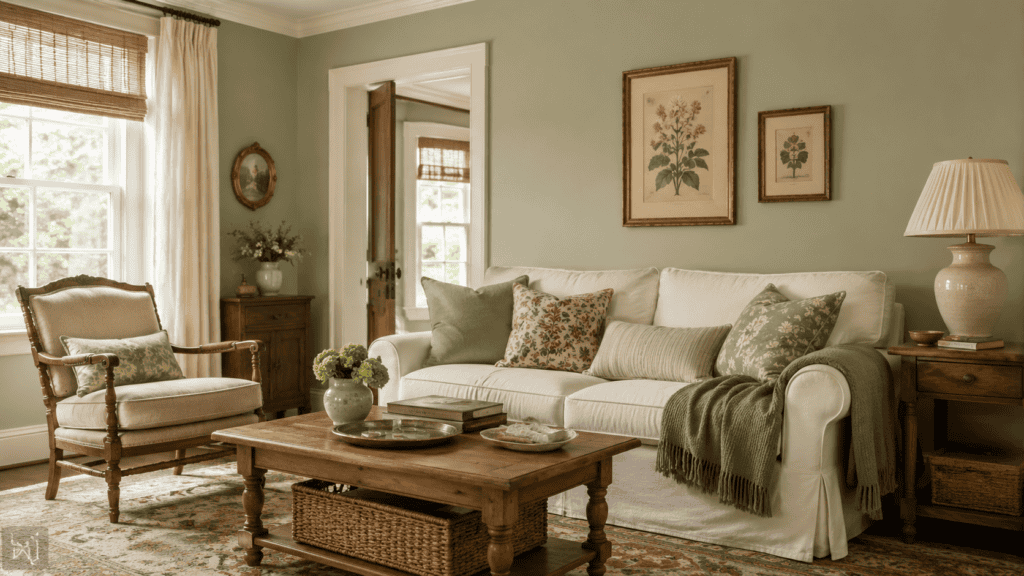
Soft sage is one of the easiest green shades to live with because it feels gentle, airy, and neutral. Unlike a brighter green, sage has gray or warm earthy undertones that keep it calm. It works especially well with cream trim, faded floral patterns, warm pine, oak furniture, and antique brass details.
Before painting the whole room, test several samples on different walls. Natural light may make sage appear fresh and silvery during the day, while warm lamps can bring out its softer olive undertones at night. A room with limited light usually benefits from a pale sage rather than a deep or muddy shade.
To keep green living room walls cozy, add texture instead of filling the room with more color. For example, use a cream slipcovered sofa, a wooden coffee table, a woven rug, and a few patterned cushions. Renters can create a similar effect with removable wallpaper, a large fabric panel, or several pieces of green artwork grouped together.
2. Add an Olive Green Sofa
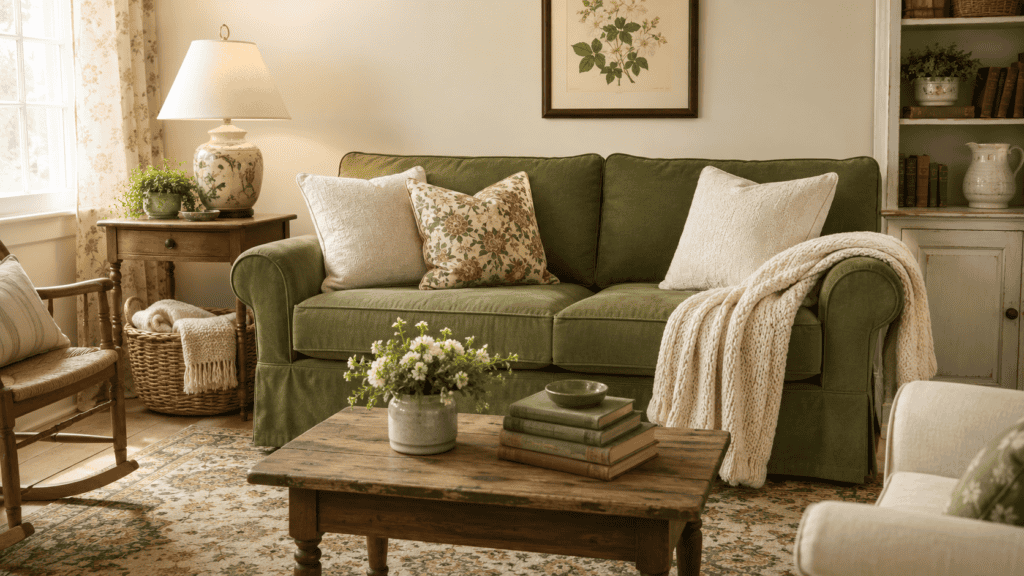
An olive green sofa creates a strong focal point without looking too formal. Because olive contains warm yellow or brown undertones, it pairs naturally with vintage furniture, faded rugs, tan baskets, and dark wood. It can also make a newer sofa feel more settled in a cottage-style room.
Choose linen, brushed cotton, velvet, or softly textured upholstery rather than a shiny fabric. Then balance the deeper color with cream pillows, a pale throw, and a lighter wall color. A floral cushion with small touches of faded red, dusty rose, or blue can help the sofa blend with the rest of the room.
If a full green sofa feels like too much of a commitment, use an olive slipcover or place two green armchairs across from a neutral sofa. This approach creates the look of a green sofa living room while keeping the largest piece of furniture flexible.
3. Use Green Floral Curtains
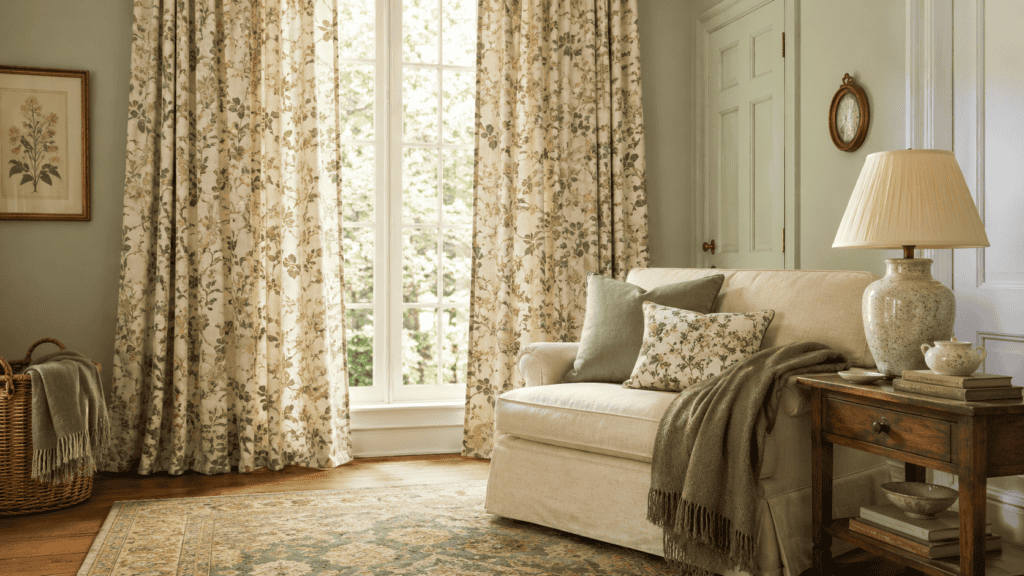
Green floral curtains bring color, pattern, and softness into a cottage room at the same time. Small botanical prints feel traditional and gentle, while larger faded florals create a bolder English cottage look. In either case, choose fabric with a cream, warm white, or pale tan background so the windows still feel bright.
Hang the curtains high and let them fall close to the floor. This simple change makes the room feel taller and gives the fabric a graceful shape. Meanwhile, a plain woven shade underneath can provide privacy without competing with the pattern.
For floral green living room ideas that feel collected rather than overly matched, repeat only one or two colors from the curtains elsewhere. For example, add a sage cushion, a faded blue vase, or a small red-and-cream textile accent. Avoid using the exact same floral fabric on every surface.
4. Layer Green and Cream Textiles
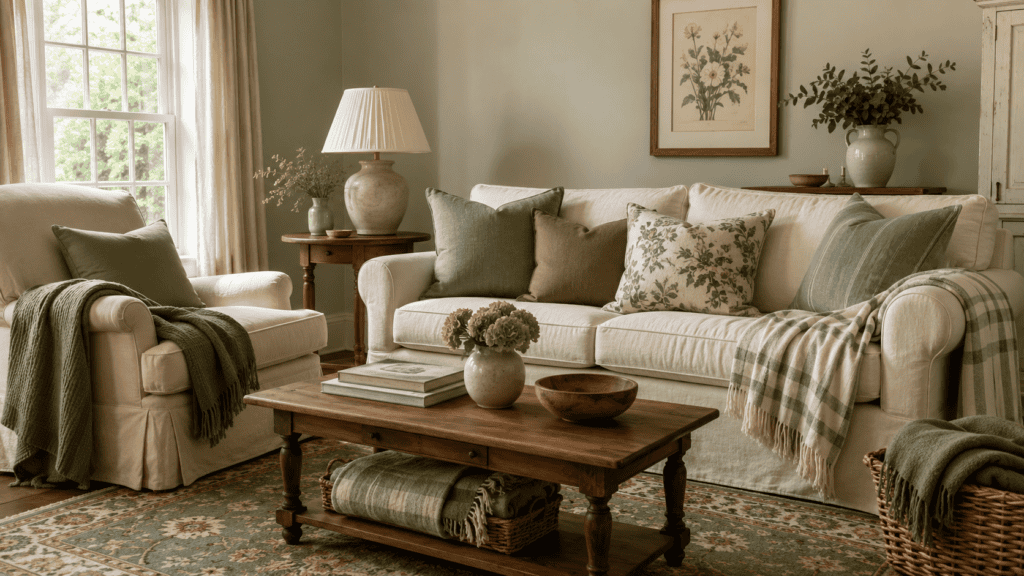
Green and cream create a soft cottage palette that feels calm throughout the year. Start with a neutral base, such as a cream sofa or warm white walls. Next, layer in sage pillows, an olive throw, a green-striped footstool, or faded botanical fabric.
Mixing several textures keeps the room interesting even when the colors are quiet. Linen, cotton, wool, velvet, and softly woven materials all reflect light differently. As a result, a cream and green living room ideas can feel rich without needing many decorative objects. Ultimately, these small changes will give you a beautiful new grandmacore look.
Choose one patterned textile to lead the room, such as a floral cushion or vintage-style rug. Then use mostly solid or lightly striped pieces around it. This method also works well with cozy cottage living room ideas because it creates comfort without adding clutter.
5. Paint a Vintage Cabinet Muted Green
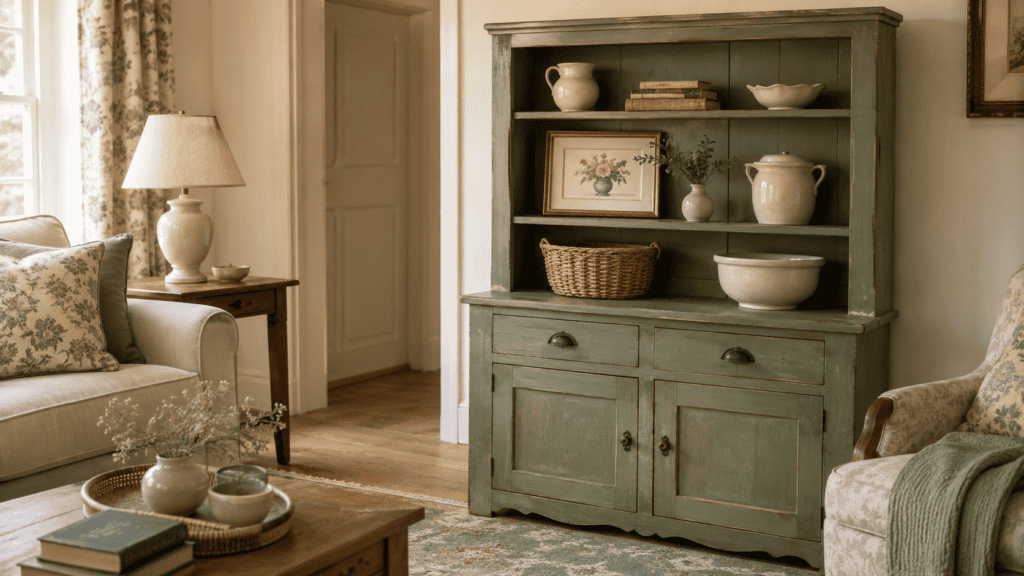
A painted cabinet is a lovely way to add green without changing the walls or buying a new sofa. Look for a small hutch, bookcase, side cabinet, or old chest with simple cottage lines. Muted sage, dusty olive, or softened blue-green paint can highlight its age and shape.
Keep some natural wear if the piece already has character. Slightly rubbed edges, old hardware, and an imperfect finish often suit a vintage green living room better than a glossy, flawless surface. However, the cabinet should still feel clean and cared for rather than damaged.
Style the piece with a restrained collection of books, cream ceramics, framed artwork, and one small basket. Leaving a little open space will help the room feel calm. This is also an affordable renter-friendly way to experiment with green cottage decor because the color can move with you.
6. Add Moss Green Velvet Accents
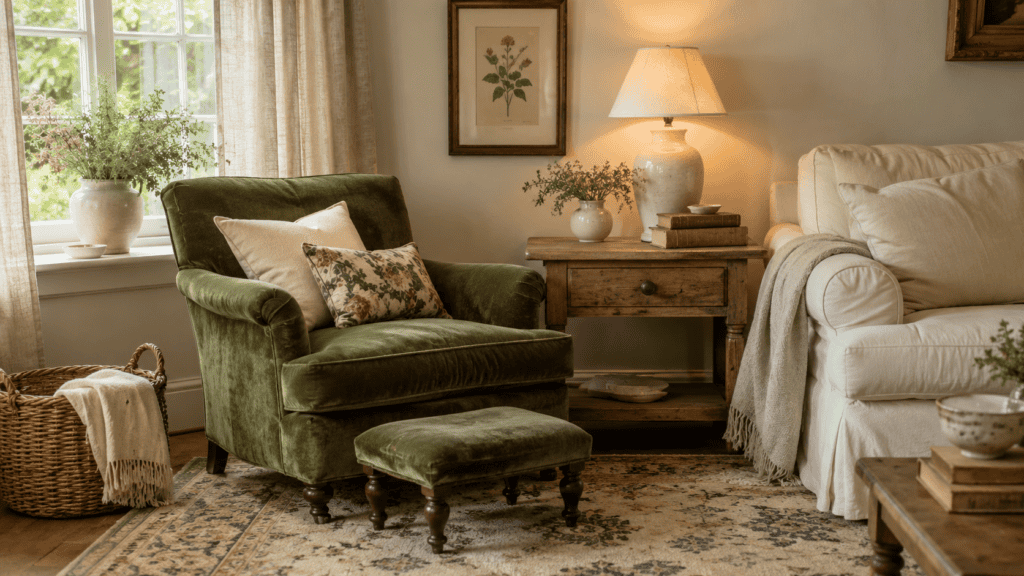
Moss green velvet brings depth and softness to a room, especially during fall and winter. Because velvet absorbs light, it can make even a small accent feel rich. Use it on a footstool, one armchair, a pair of cushions, or a small bench rather than covering every piece in the room.
Balance velvet with casual cottage materials so the space does not become too formal. A woven basket, weathered wooden table, cotton curtains, and a simple wool rug will soften the richer fabric. In addition, cream walls and warm lamplight keep a moss green living room ideas from feeling dark.
If you already have many patterns, choose solid moss velvet. On the other hand, if the room is mostly plain, a small velvet cushion with piping or a subtle botanical design can add needed detail.
7. Decorate With Botanical Prints
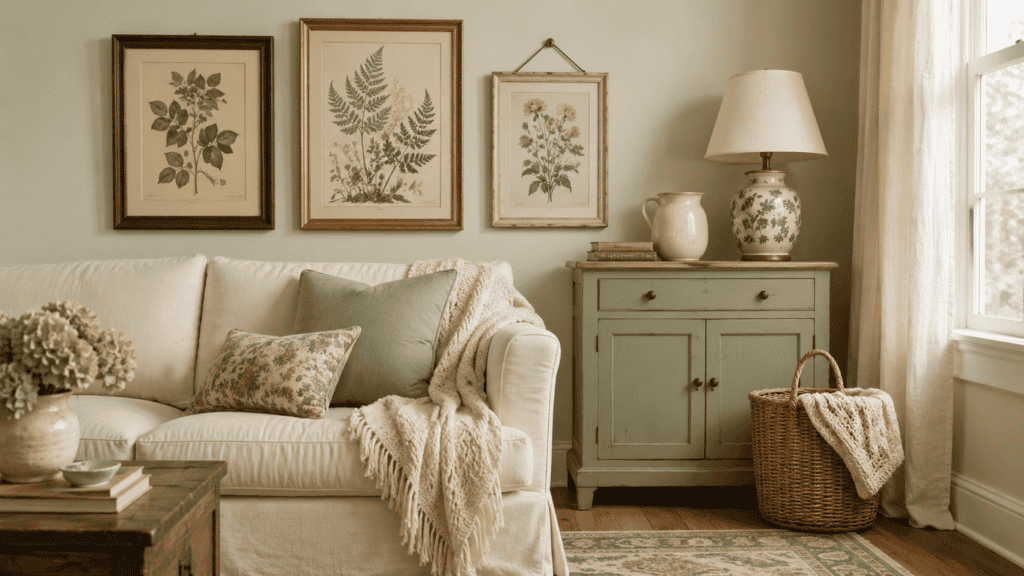
Botanical prints are an easy way to connect green living room ideas with the natural world. Vintage flower studies, fern illustrations, pressed leaves, and simple garden sketches all fit a cottage-style green living room. They also add color without taking up useful floor space.
Group two or three related prints above a sofa or cabinet. Use wood, aged brass, or simple painted frames instead of matching modern black frames. The images do not need to be identical, although they should share a similar background color or drawing style.
For renters, framed botanical art can create a nature-inspired living room without paint. Similarly, a large botanical wall hanging or removable print can act like a green accent wall. Keep the surrounding accessories simple so the artwork remains the focus.
8. Pair Green With Warm Wood
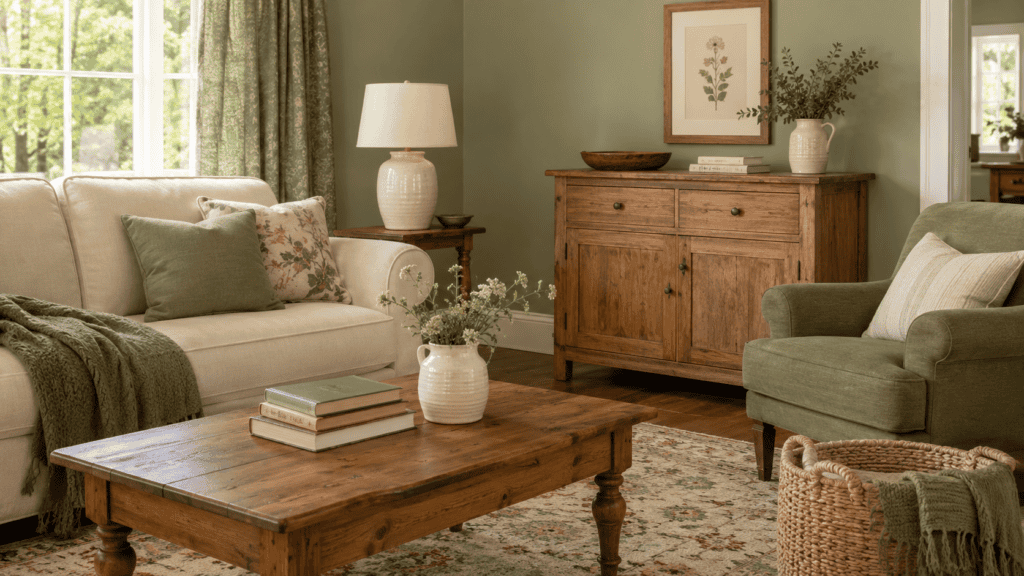
Green and warm wood naturally belong together because both colors come from the landscape. Oak, pine, walnut, and aged fruitwood can make sage and olive feel warmer, while green prevents a wood-filled room from looking too brown. This pairing works especially well in a green country living room.
Choose a few substantial wooden elements rather than many small pieces. For example, combine a wooden coffee table with a vintage sideboard and one simple picture frame. Then add green through walls, upholstery, curtains, or textiles. You may also be creating a grandmacore decor space without knowing it.
Avoid placing every dark wooden piece in one area of the room. Instead, spread the wood tones around the space for balance. A wood and green living room ideas feel most inviting when cream fabric, natural baskets, and soft lighting break up the deeper colors.
9. Use Forest Green Built-Ins
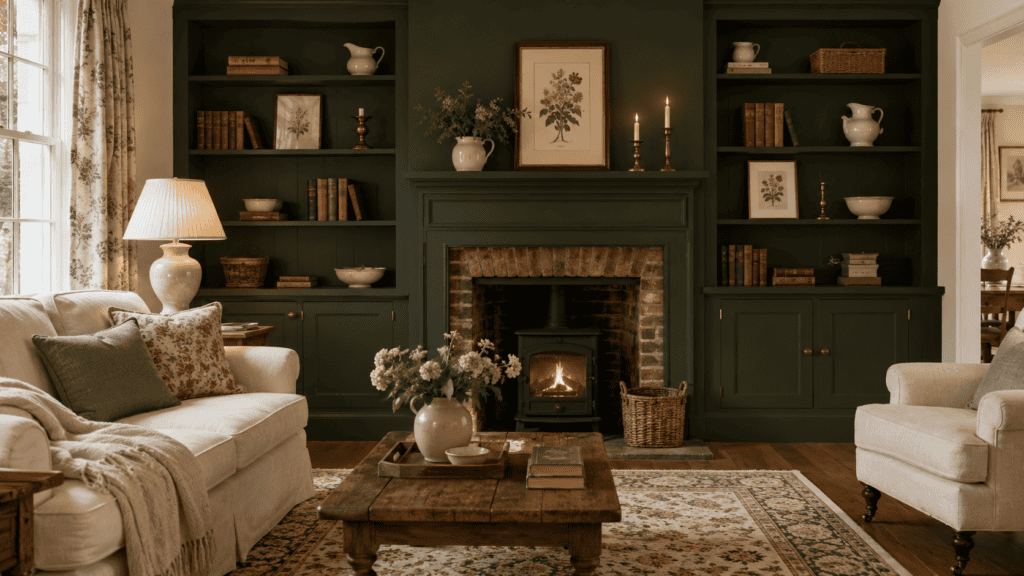
Forest green built-ins create a dramatic cottage feature, especially around a fireplace or along one wall. The deep color can make books, cream pottery, brass candlesticks, and framed pictures stand out beautifully. Still, it works best when the rest of the room includes plenty of lighter surfaces.
Paint only the shelves and lower cabinets if a full wall of dark green feels overwhelming. Alternatively, use forest green inside the backs of open shelving while leaving the outer frame cream. This creates depth without making the room feel smaller.
Style the shelves carefully rather than filling every inch. Arrange books both vertically and horizontally, add a few baskets for hidden storage, and leave some open space. Thoughtful editing is important because dark built-ins can quickly make a room appear crowded.
10. Add a Green Vintage-Style Rug
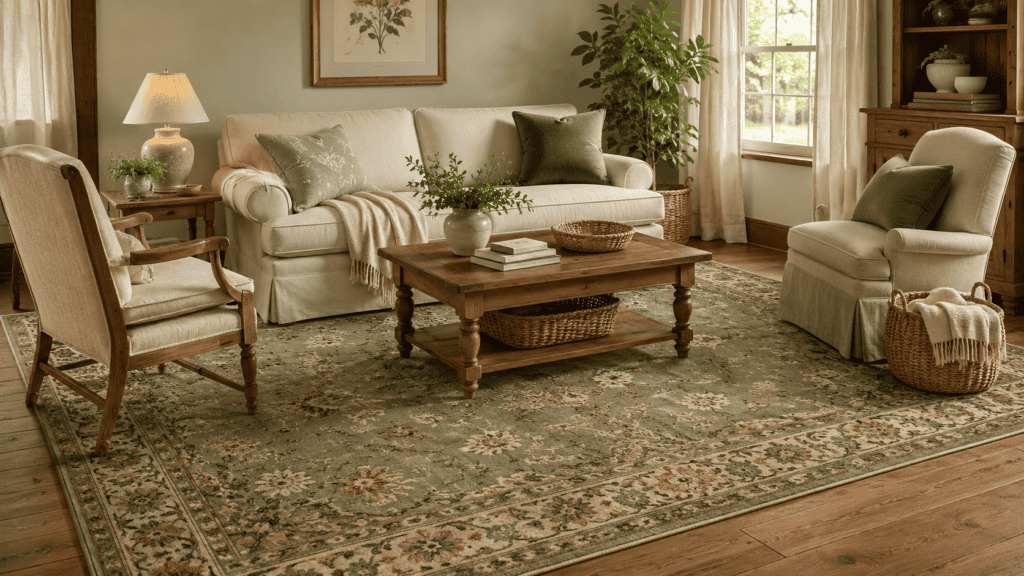
A vintage-style rug can bring green into the room from the ground up. Look for a faded pattern with sage, moss, olive, cream, tan, or small touches of dusty blue and muted red. A softly distressed design will blend more easily with cottage furniture than a sharp modern pattern.
Choose a rug large enough to connect the seating area. Ideally, at least the front legs of the sofa and chairs should rest on it. As a result, the room will feel more settled and spacious.
If the room already contains floral curtains or patterned furniture, select a quieter rug. However, a mostly neutral room can handle a more detailed design. A green rug is also useful for renters because it changes the mood of the space without permanent work.
This is also the perfect grandmacore decor idea.
11. Mix Several Muted Green Shades
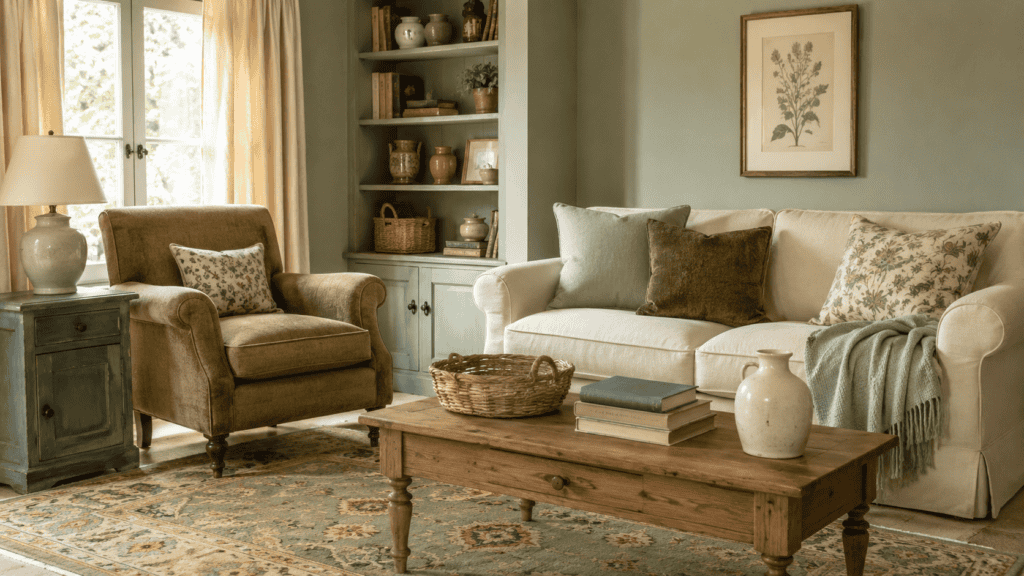
With charming green living room ideas, space does not need to rely on one exact shade. In fact, mixing sage, olive, moss, and blue-green often creates a more natural, collected look. The key is choosing greens that share a muted or slightly grayed quality.
Begin with one main green, such as sage walls. Then add a deeper olive chair, moss cushions, and perhaps one dusty blue-green ceramic piece. Keep cream, tan, and wood between the shades so each color has room to breathe.
Avoid matching every fabric and accessory perfectly. Cottage rooms usually look more welcoming when pieces seem gathered gradually. This relaxed approach is common in vintage cottage decorating ideas, where variation adds personality rather than disorder.
12. Create a Green Cottage Reading Corner
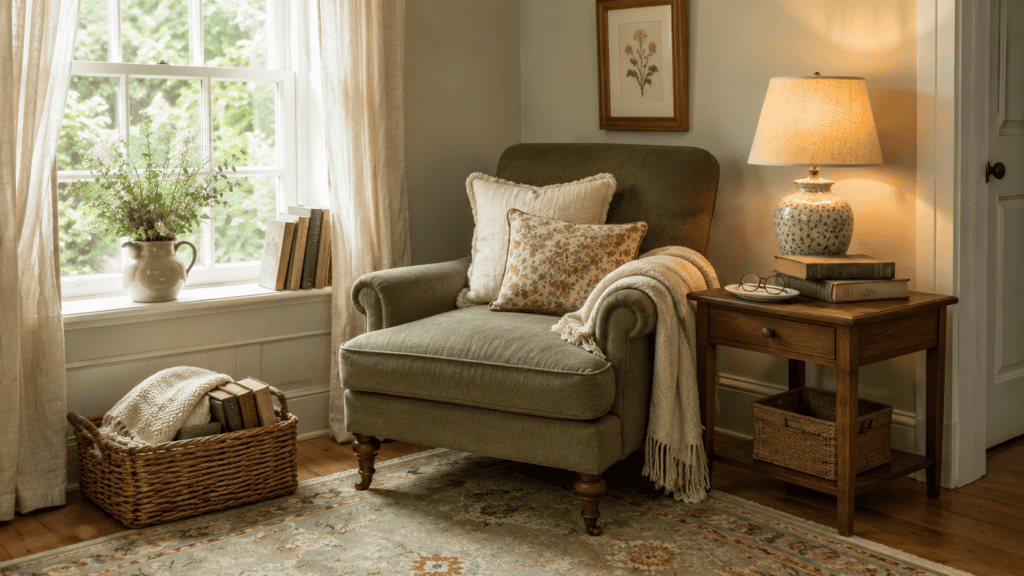
A reading corner is a perfect place to try a deeper shade of green on a smaller scale. Place an olive, moss, or sage chair beside a wooden table and a warm lamp. Then add a small basket for books, a soft throw, and one comfortable cushion.
Position the chair near a window when possible. Natural light makes the green upholstery feel fresh during the day, while a shaded lamp creates a cozy evening glow. A small botanical print or narrow wall shelf can complete the corner without making it busy.
In a compact room, choose a chair with visible legs and modest arms. This keeps the floor more open and helps the furniture feel lighter. You can also use a cream chair with a green throw if you want a less permanent version of a cozy green sitting room.
Check out my other article on creating a reading space nook right for you.
13. Add Green Ceramics and Vintage Accessories
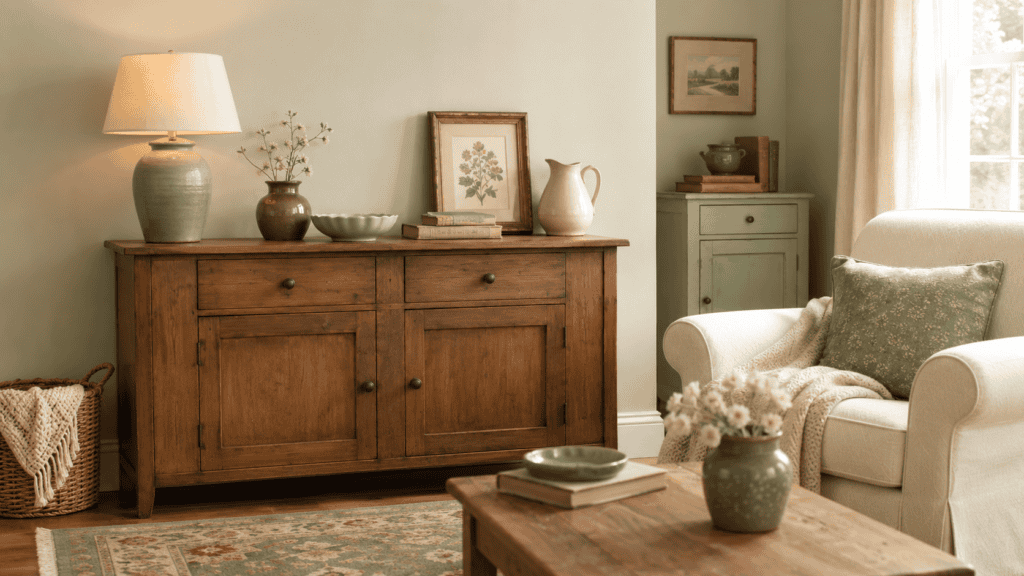
Small accessories offer one of the simplest ways to test green in a living room. Look for vintage-style pottery, ceramic lamps, glass bottles, book covers, trays, or small framed pictures in muted shades. Because these pieces are easy to move, you can adjust the amount of color whenever the room begins to feel crowded.
Group accessories in small arrangements rather than scattering them across every surface. For example, place a green ceramic lamp, two old books, and a cream dish on a side table. Elsewhere, use one olive vase or a pair of small botanical prints.
Vary the height and material of each arrangement. A glossy ceramic vase looks more interesting beside worn books and a woven basket than beside several similar ceramics. Therefore, even a modest collection can feel layered and personal.
14. Bring Green Into a Small Living Room
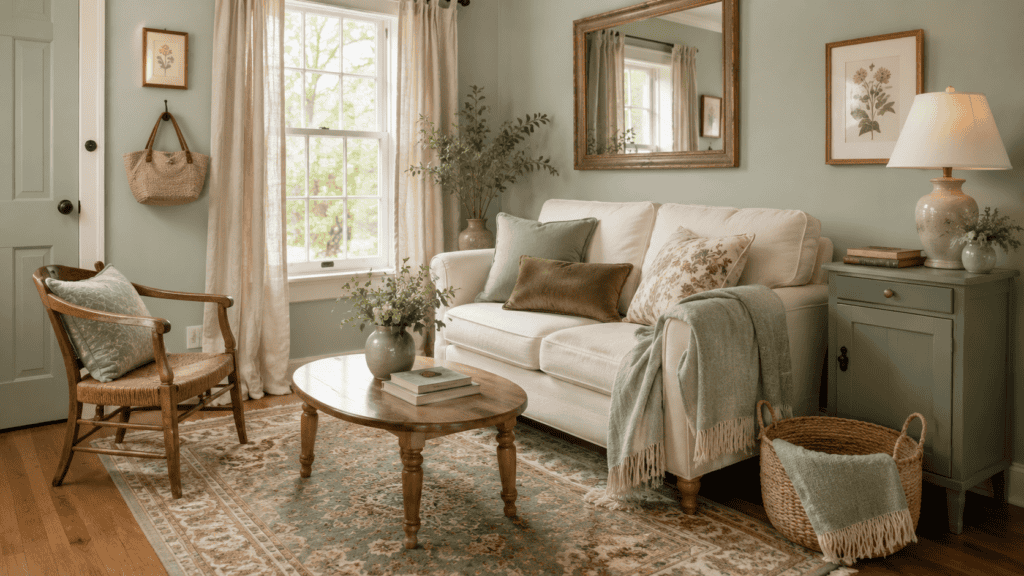
A small green living room can feel open and restful when you choose the shade carefully. Pale sage, silvery green, and muted blue-green reflect more light than deep olive or forest tones. Use these lighter colors on larger surfaces, then reserve darker green for cushions, artwork, or one chair.
Cream upholstery and warm white trim can prevent the room from feeling enclosed. In addition, a mirror placed across from a window will help move natural light around the space. Furniture with visible legs and carefully edited surfaces will also make the floor area appear larger.
Try one main green feature instead of several competing statements. A sage wall, green curtains, or a painted cabinet may be enough. These principles work naturally with small space decorating ideas, especially when storage baskets and decorative pieces serve a useful purpose.
Read more about decorating small living rooms here.
15. Balance Green With Cream and Natural Textures
Cream is one of the best partners for green because it softens both light and dark shades. Warm white walls, cream upholstery, pale curtains, and ivory ceramics give the eye a place to rest. Meanwhile, green brings life and character to the neutral background.
Add natural textures through linen, wool, wood, jute, seagrass, and soft woven baskets. These materials keep a warm green living room from feeling flat or overly coordinated. They also reinforce the relaxed, practical quality of cottage style.
Use a simple balance when finishing the room: one main green feature, several cream surfaces, and a few natural brown or tan details. Then add pattern through a floral pillow, striped throw, or faded rug. The result will feel cozy, layered, and easy to live with.
How to Choose the Right Green for Your Living Room
The right green depends on the room’s light, size, and existing finishes. Sage is often the safest starting point because its gray undertones make it gentle and adaptable. It works beautifully in bright rooms, although warmer sage shades can also soften a room with cooler northern light.
Olive has more yellow or brown beneath it, so it feels earthy, aged, and especially welcoming beside warm wood. Moss is richer and deeper, which makes it ideal for velvet, rugs, and reading corners. Forest green creates drama and suits built-ins, cabinets, or one feature wall, while muted blue-green feels fresher and slightly more airy.
Always test paint or fabric in the actual room. A color that looks green in the morning may appear grayer, bluer, or browner later in the day. Therefore, view the sample beside your sofa, flooring, wood furniture, and curtains before making a final decision.
Room size matters as well. Light sage or blue-green can help a compact room feel open, whereas forest green may work better on a smaller feature such as a cabinet. However, a dark color can still feel cozy rather than cramped when you add cream upholstery, mirrors, warm lamps, and open space.
Best Colors to Pair With Green Cottage Decor
Cream and warm white are classic partners for green because they add brightness without creating a harsh contrast. Tan, camel, and natural brown also work well, especially through leather, warm wood, rugs, and woven baskets. Together, these colors create a relaxed cottage foundation.
Faded blue can make sage and olive feel calm and traditional. Muted yellow, meanwhile, adds a small amount of cheerful warmth. Dusty rose works beautifully with botanical greens, while a limited faded red accent can bring age and character to the room.
Use stronger companion colors sparingly. For example, one red-and-cream cushion or a dusty rose floral print may be enough. This restrained approach keeps the green cottage lounge peaceful while still giving it personality.
Warm wood is particularly important because it softens green and connects it to nature. Similarly, woven textures prevent the palette from looking too polished. You can use these same gentle color relationships throughout your home, just as softer blues create restful cozy blue bedroom ideas and warm reds add character to cozy red kitchen ideas.
How to Make a Green Living Room Feel Cozy
Color alone will not make a room feel cozy. Instead, build warmth through soft lighting, comfortable fabrics, and furniture arranged for conversation. Use a ceiling light only when necessary, then add table lamps, floor lamps, and perhaps a small wall light to create a gentler evening atmosphere.
Rugs, curtains, cushions, and throws soften hard surfaces and absorb sound. Layering these elements makes a cottage-style green living room feel protected and welcoming. However, you do not need to cover every chair or fill every corner. A few thoughtfully chosen textiles often create more comfort than a large amount of clutter.
Books and baskets add both usefulness and character. Place a small stack of books on the coffee table, keep extra throws in a soft woven basket, and use closed cabinets for items that are not attractive. As a result, the room can feel collected while remaining easy to live in.
Vintage furniture also brings warmth because its worn wood and familiar shapes keep green from feeling too new or trendy. Mix old and newer pieces rather than buying a full matching set. Finally, add personal details such as a framed flower print, inherited dish, handmade cushion, or favorite reading lamp. Those small choices turn general decor into a home.
Final Thoughts on Cozy Green Living Room Ideas
The most inviting cozy green living room ideas do not depend on one perfect paint color or an expensive makeover. Instead, they combine restful shades with cream fabrics, warm wood, vintage details, soft lighting, and natural texture. Each layer helps the room feel comfortable, personal, and connected to the outdoors.
Start with one change that fits your home. You might add sage cushions, hang green floral curtains, paint a small cabinet olive, or place a moss-colored throw over a cream chair. Then live with the color for a while before adding more.
Green is wonderfully flexible, so there is no need to make every piece match. A mix of sage, olive, moss, forest green, and muted blue-green can make the room feel as though it developed naturally over time. Above all, choose the shades and pieces that make you want to settle in, put your feet up, and enjoy your home.