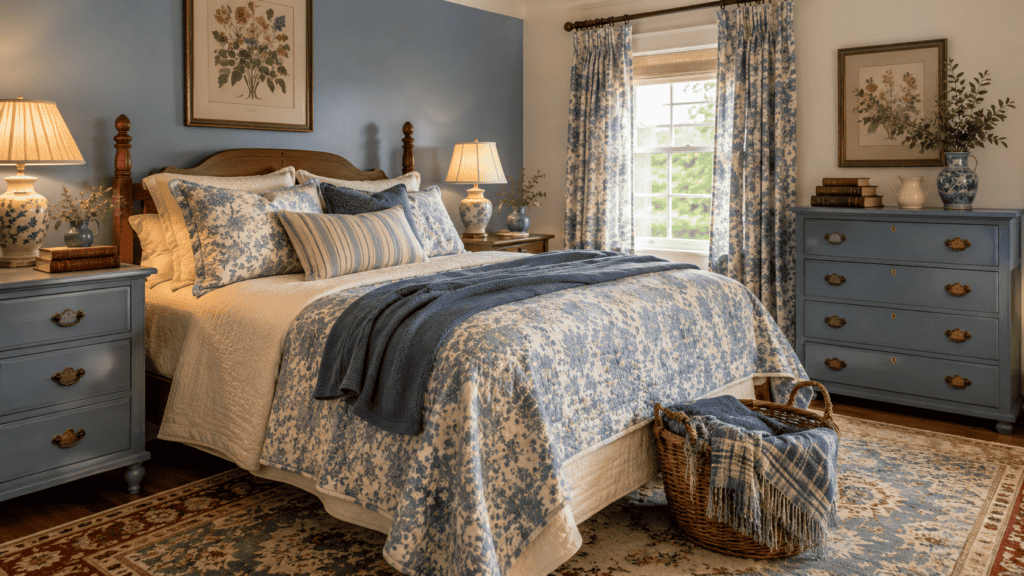
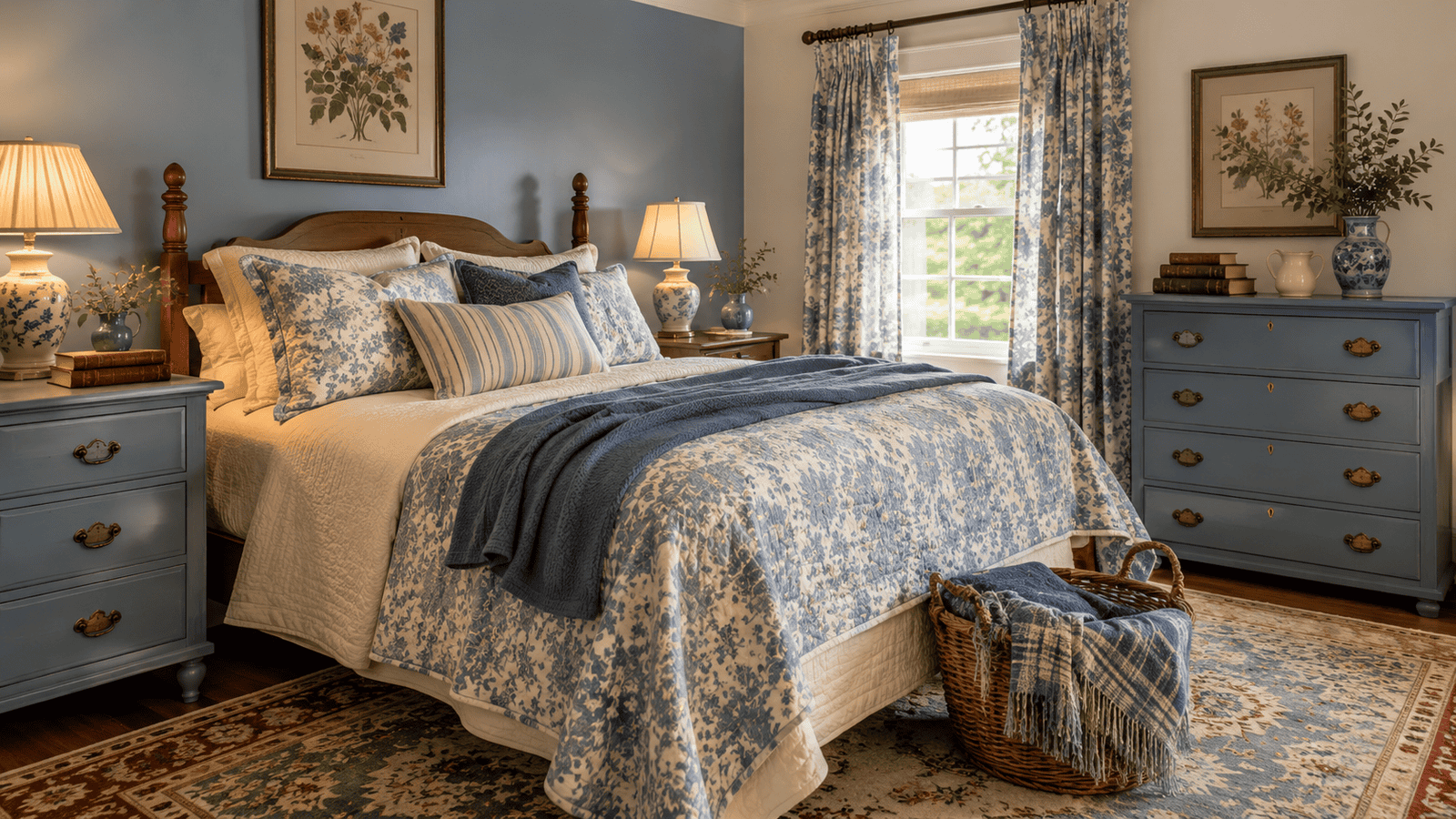
Cozy blue bedroom ideas can make a sleeping space feel peaceful, personal, and warmly collected. Although blue is sometimes associated with crisp coastal rooms, it can feel completely different when paired with cream, warm wood, floral patterns, aged brass, and softly worn furniture. Dusty blue, faded denim, and softened navy all work beautifully in cottage-inspired bedrooms because they create color without making the room feel loud or overly polished.
There are many ways to bring blue into a bedroom. You can paint the walls, layer patterned bedding, frame the windows with curtains, refinish a dresser, add a rug, hang removable wallpaper, or begin with smaller accents. Therefore, you do not need to remodel the entire room or replace everything you already own. A folded quilt, painted bedside table, floral lampshade, or blue ceramic vase may be enough to establish the palette.
Warm supporting colors are especially important. Cream keeps the room softer than stark white, while warm wood prevents the space from feeling cold. In addition, faded red, pale buttery yellow, and muted sage can add personality without competing with the main color. These shades often appear naturally in vintage-style rugs, botanical artwork, old quilts, and patterned fabrics.
If you are in love with the vintage style, but working with a small bedroom space, this article may help you to think things through.
The following ideas include options for both small bedrooms and larger rooms. Some create a light, airy feeling, while others use darker tones for a more enclosed retreat. Most importantly, each idea can be adapted to suit the furniture, lighting, and decorative pieces you already have. By choosing one main shade and repeating it thoughtfully, you can build a bedroom that feels calm, layered, and comfortable rather than perfectly matched.
Affiliate Disclosure: This post may contain affiliate links. If you click through and make a purchase, I may earn a small commission at no extra cost to you. Thank you for supporting Cozy Charms.
1. Paint the Walls a Soft Dusty Blue
Soft dusty blue walls create a gentle backdrop that feels more interesting than plain cream but still remains easy to decorate around. Because the shade contains muted gray or green undertones, it usually feels quieter and more aged than a bright, clear blue.
Pair dusty walls with cream bedding, medium-toned wood furniture, and a faded floral quilt. Then repeat the wall color in one or two smaller places, such as a patterned pillow or ceramic lamp. Aged brass hardware and warm lamp light will add contrast and prevent the room from appearing flat.
Before painting the entire bedroom, test a large sample beside the bed, flooring, and curtains. Natural light can make the same shade look pale in the morning and deeper by evening. Therefore, viewing the color throughout the day is more useful than judging a small paint chip.
For a small bedroom, keep the ceiling, trim, and larger bedding pieces light. This balance allows the wall color to add character without making the bedroom feel crowded. These dusty blue bedroom ideas work especially well when the furniture has simple cottage lines and softly worn finishes.
2. Layer Blue and Cream Bedding
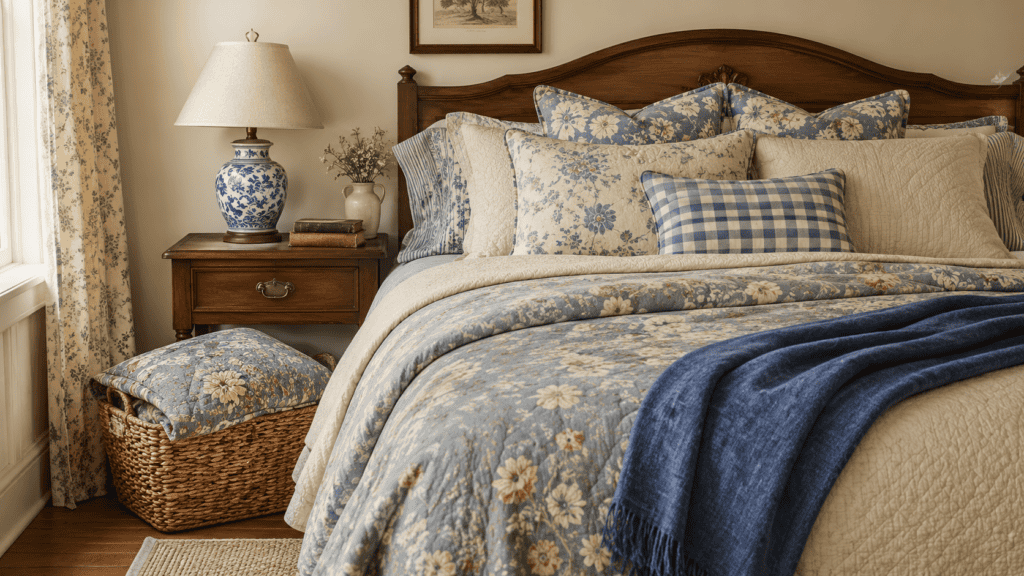
Layered bedding is one of the simplest ways to explore cozy blue bedroom ideas without making a permanent change. Start with a cream quilt, duvet, or coverlet, and then add blue through a floral blanket, striped pillowcases, or a folded denim-colored throw.
Instead of buying a perfectly matched set, combine two or three related patterns. For example, pair a faded floral pillow with a narrow stripe and a small checked cushion. Keep the scale varied so the patterns do not compete. A large floral works best beside a finer stripe or tiny check.
Cream should remain visible between the layers because it gives the eye a place to rest. Meanwhile, one deeper navy cushion can provide contrast, especially if the rest of the palette is pale.
Extra quilts and seasonal blankets can quickly overwhelm a small room. A soft woven basket, blanket chest, or under-bed container can keep them nearby without adding visual clutter. For additional practical help, explore these storage solutions for quilts and linens while preserving a relaxed, decorative look.
3. Add Blue Floral Wallpaper
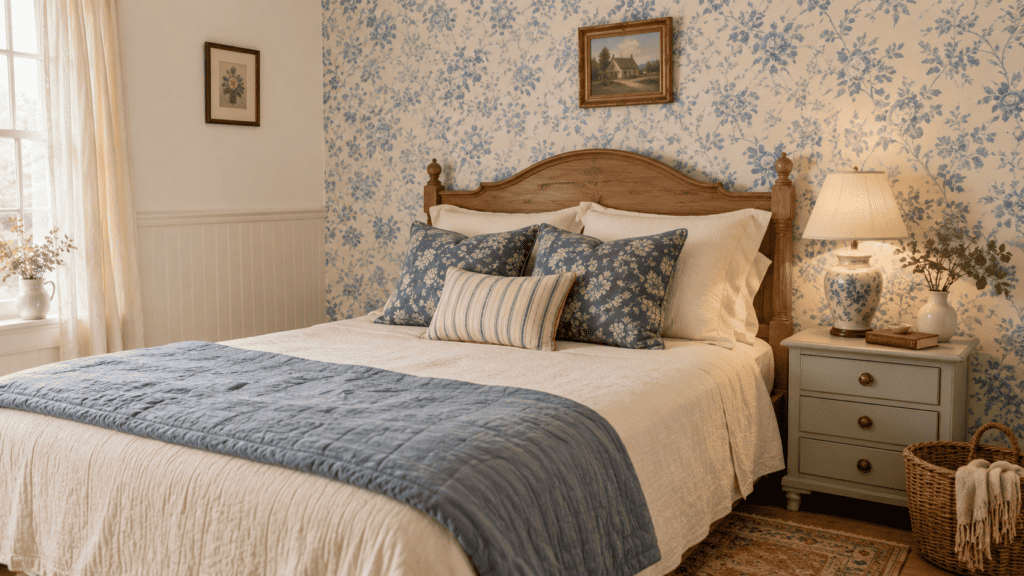
Blue floral wallpaper can make a cozy blue bedroom ideas feel established and full of character. Small-scale prints often suit compact rooms, while larger florals can create a stronger statement behind the bed in a more spacious bedroom.
You do not need to cover every wall. Instead, use wallpaper on the headboard wall, inside an alcove, or above cream beadboard. This approach keeps the pattern focused and allows the remaining surfaces to feel calm. Removable wallpaper is also a useful option for renters or anyone who prefers an easier future update.
Choose a design with a cream, faded white, or muted blue background. Then pull two colors from the pattern for the bedding and accessories. For example, repeat a dusty blue flower in the quilt and a pale yellow detail in a ceramic lamp.
Because floral wallpaper already provides plenty of movement, keep nearby artwork and furniture simple. One wooden bed, a clear bedside surface, and a restrained group of pillows are usually enough. As a result, the room feels layered rather than busy.
4. Use a Painted Blue Dresser
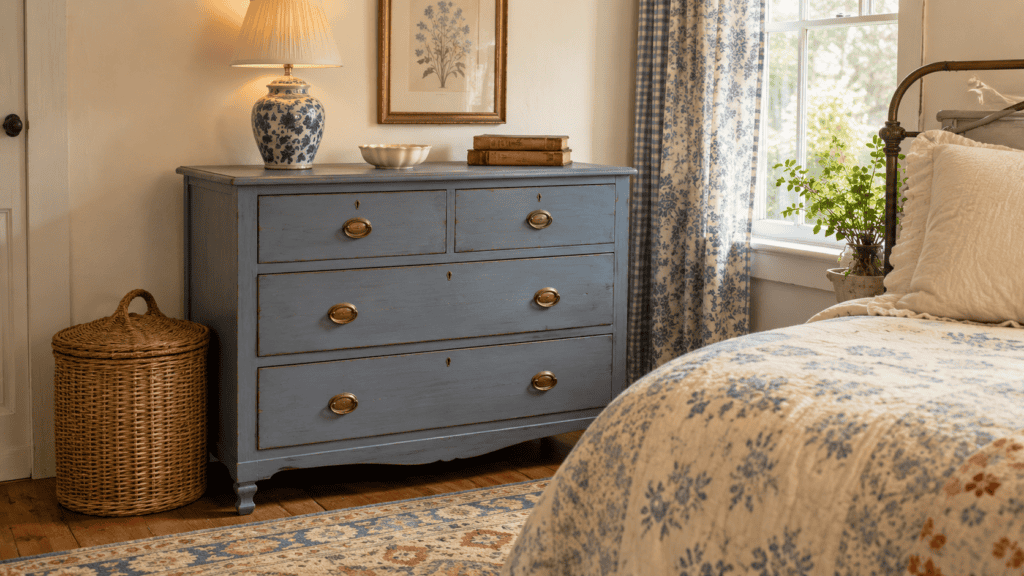
A painted dresser can introduce a noticeable amount of color without changing the walls. This makes it a practical choice for renters, small bedrooms, or anyone who wants to test a shade before committing to a larger project.
Dusty blue, muted teal-blue, faded denim, and soft French blue all work well on furniture with traditional lines. If the dresser already has attractive wood details, consider painting only the drawer fronts or base. Conversely, a plain secondhand chest may gain more character from a softly distressed finish and aged brass knobs.
Place the dresser against cream walls for contrast, or use it in a tonal room with slightly darker blue wall for cozy blue bedroom ideas. However, avoid matching the dresser exactly to every other blue element. Slight variation helps the room feel collected over time.
Keep the top functional and mostly clear. A ceramic lamp, one framed botanical print, and a small dish for jewelry may be enough. If the dresser must store many items, use drawer dividers or small boxes inside so the visible surface remains restful.
5. Create a Blue and White Cottage Bedroom
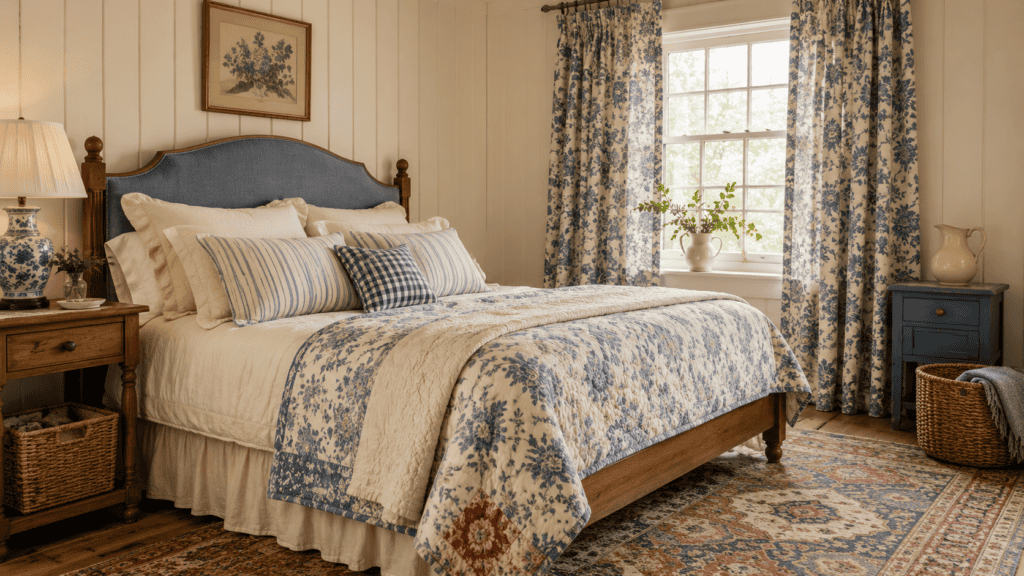
Blue and white is a classic pairing, but warm cream usually feels more relaxed than brilliant white in a cottage bedroom. Begin with cream walls or bedding, and then add blue through a quilt, curtains, an upholstered headboard, or a painted bedside table.
Natural texture keeps the combination from appearing formal. For example, include a warm wood bench, woven basket, linen bed skirt, or softly worn rug. A blue-and-white ceramic lamp can add a traditional note, although one or two pieces are usually more effective than a large matching collection.
Pattern also matters. Combine florals, stripes, and checks in different scales rather than repeating one print throughout the room. Meanwhile, leave some solid cream fabric visible to keep the bed from looking crowded.
These blue and cream cozy blue bedroom ideas are easy to adjust by season. Add a heavier navy throw in winter, then replace it with a pale blue cotton blanket in warmer months. The basic palette remains consistent, while the bedroom still feels refreshed.
6. Layer Several Shades of Blue
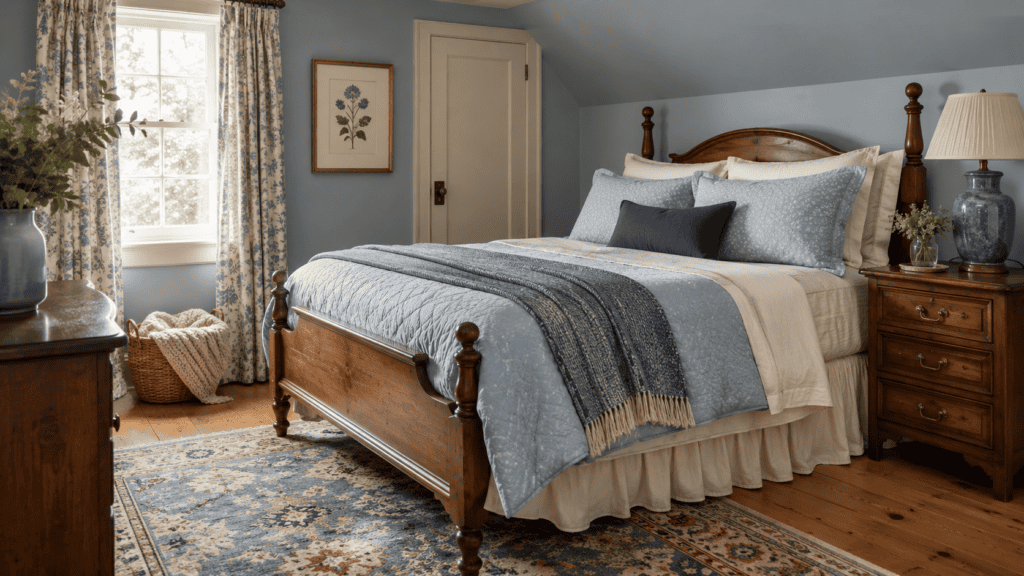
A room with only one exact shade can look overly coordinated. Instead, layering pale blue, dusty blue, denim, and softened navy gives the bedroom more depth and makes older furnishings easier to combine.
Choose one dominant shade first. For example, use dusty blue on the walls, then add a denim quilt and a darker navy cushion. Keep the undertones compatible so one shade does not appear sharply purple while another leans strongly green.
Cream bedding and warm wood furniture are helpful connecting elements. They separate the blues and prevent the room from becoming visually heavy. In addition, a vintage-style rug containing several blue tones can tie the entire palette together and is the perfect cozy blue bedroom ideas.
For a small bedroom, use the darkest shade sparingly. A folded throw, lamp base, or narrow stripe may provide enough contrast. Larger rooms can support a deeper upholstered chair or accent wall.
This layered approach is useful when working with existing pieces because each item does not need to match perfectly. Consequently, the bedroom feels gathered gradually rather than purchased as one set.
7. Add a Moody Navy Accent Wall
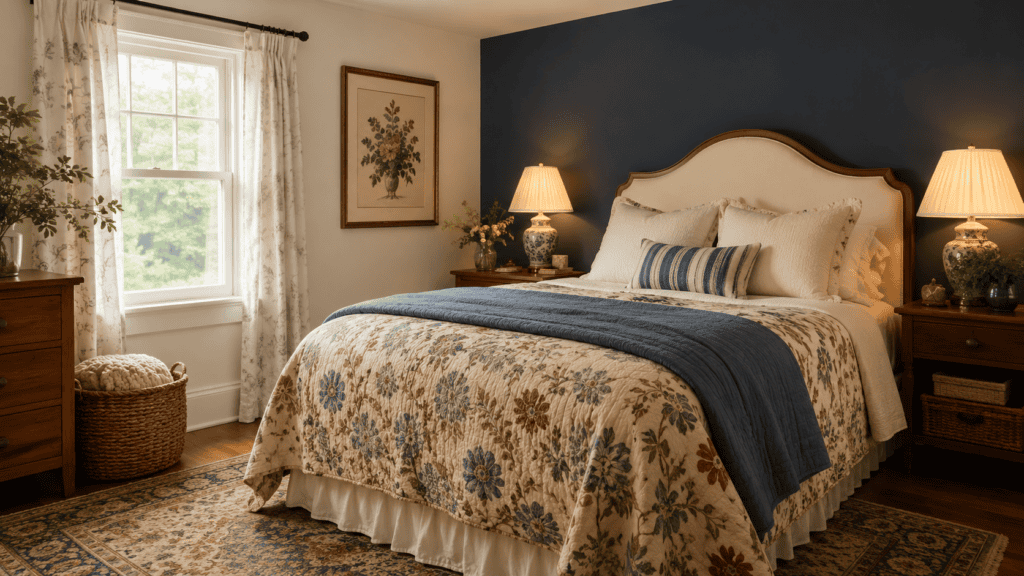
A softened navy accent wall can make the bed feel grounded and create a warm, enclosed atmosphere. Although dark colors are sometimes avoided in small rooms, they can give a compact bedroom more intention when used carefully.
Place the navy behind the headboard so it becomes a clear focal point. Then contrast it with cream bedding, warm wood, and lighter artwork. A brass reading lamp or ceramic bedside lamp will stand out beautifully against the deeper color.
Choose a navy with muted undertones rather than a bright nautical blue. Pair it with a faded floral quilt, tan basket, or vintage rug containing cream and restrained red. These warmer details shift the room away from a coastal look.
If the bedroom receives little daylight, test the color before painting. It may appear nearly black in shaded corners. Therefore, good bedside lighting and a lighter ceiling are especially important.
Renters can create a similar effect with removable wallpaper, a large fabric panel, or an upholstered headboard in dark blue. Each option adds depth without requiring permanent paint.
8. Bring In Blue Gingham or Checked Fabric
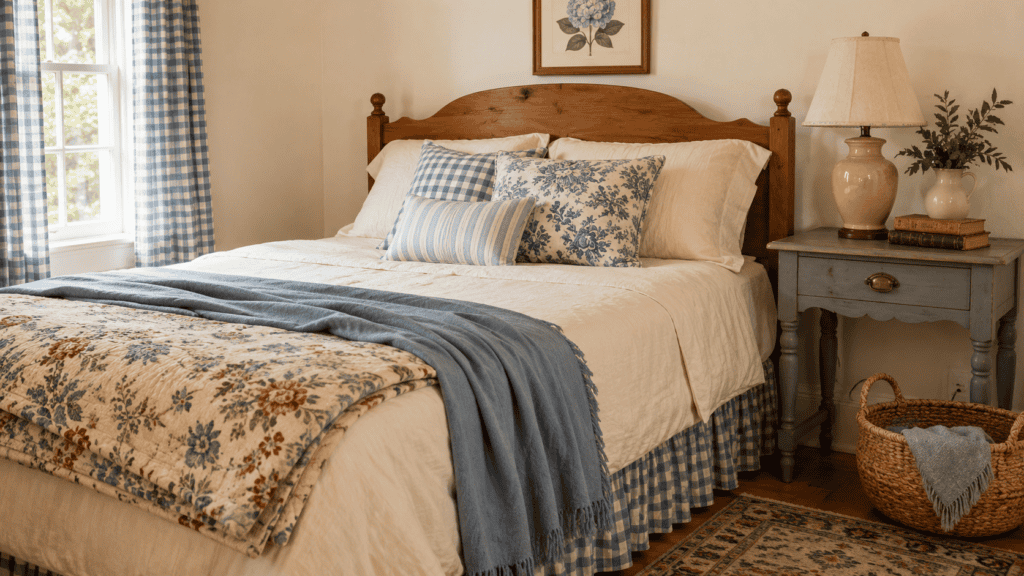
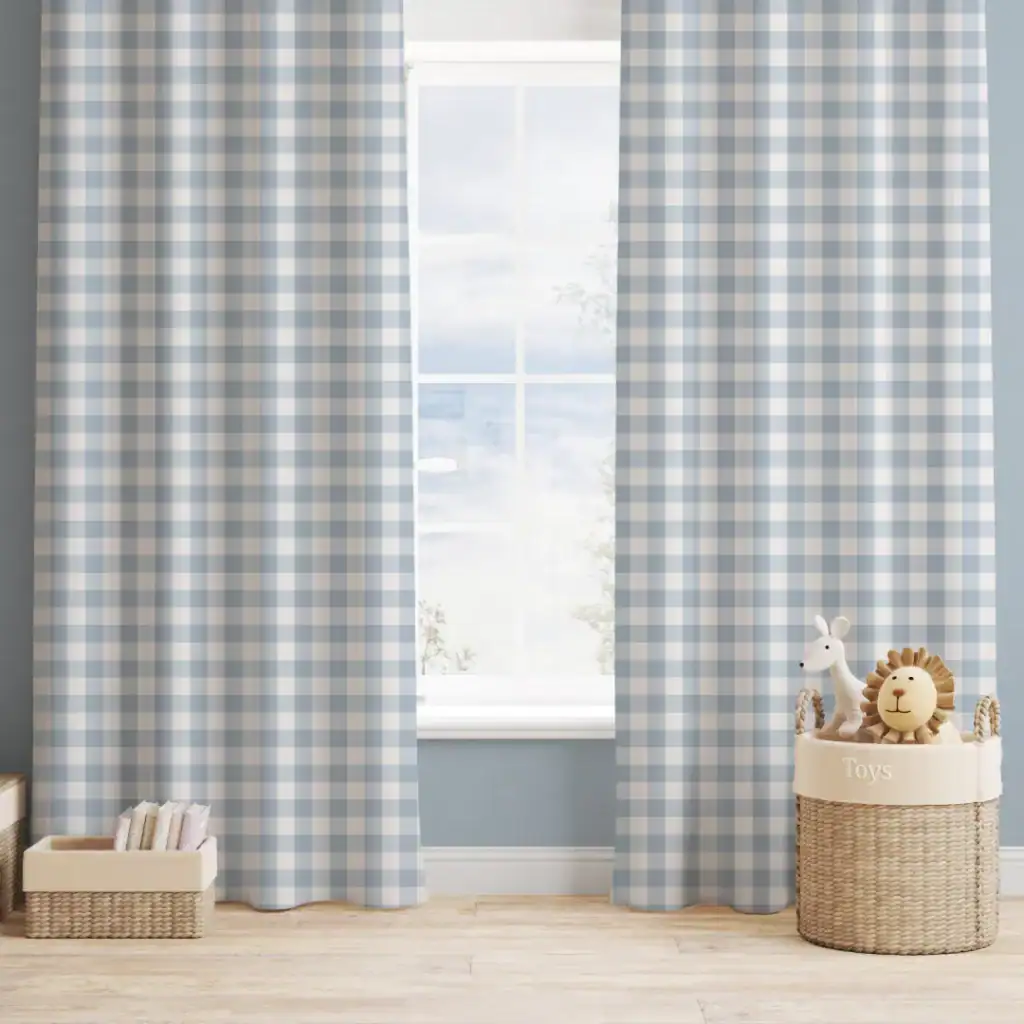
Blue gingham, windowpane checks, and soft plaids bring a casual country feeling to a bedroom. These patterns work well on curtains, pillow covers, bed skirts, chair cushions, or a folded throw.
Use checks as one part of the pattern mix rather than repeating them everywhere. For example, combine blue gingham curtains with floral bedding and a narrow striped pillow. Because each pattern has a different scale, the room will look layered without becoming chaotic.
A checked fabric is also a useful renter-friendly update. Curtain panels or removable pillow covers can change the atmosphere without paint or new furniture. In a small bedroom, choose a finer check so the pattern does not dominate the room.
Warm wood and cream textiles soften the graphic quality of checks. Meanwhile, aged brass curtain rods or simple dark metal hardware add definition.
For a more collected look, avoid placing identical gingham on the curtains, bed skirt, and cushions. Slightly different patterns feel more natural and allow each piece to contribute without turning the bedroom into a theme.
For more ideas in other rooms like kitchen curtains, check out this article.
9. Ground the Room With a Vintage-Style Blue Rug

A vintage-style rug can introduce blue at floor level while connecting furniture, bedding, and wall color. Look for a faded pattern that combines dusty blue with cream, warm tan, muted red, or pale gold.
In a larger bedroom, place the rug beneath the lower two-thirds of the bed so it extends along both sides and the foot. In a small room, a runner beside the bed may provide enough softness and color without covering the entire floor.
The rug should support the palette rather than repeat every shade exactly. For example, a blue and red pattern can connect a navy throw with a small faded red cushion. As a result, the accent color feels intentional.
Low-pile rugs are generally easier to clean and allow furniture to sit more evenly. Add a rug pad to prevent slipping, especially on wood flooring.
If the room already includes floral wallpaper or heavily patterned bedding, choose a rug with a quieter worn design. Conversely, a more detailed rug can add interest when the walls and bedding are mostly solid.
10. Frame the Windows With Blue Curtains
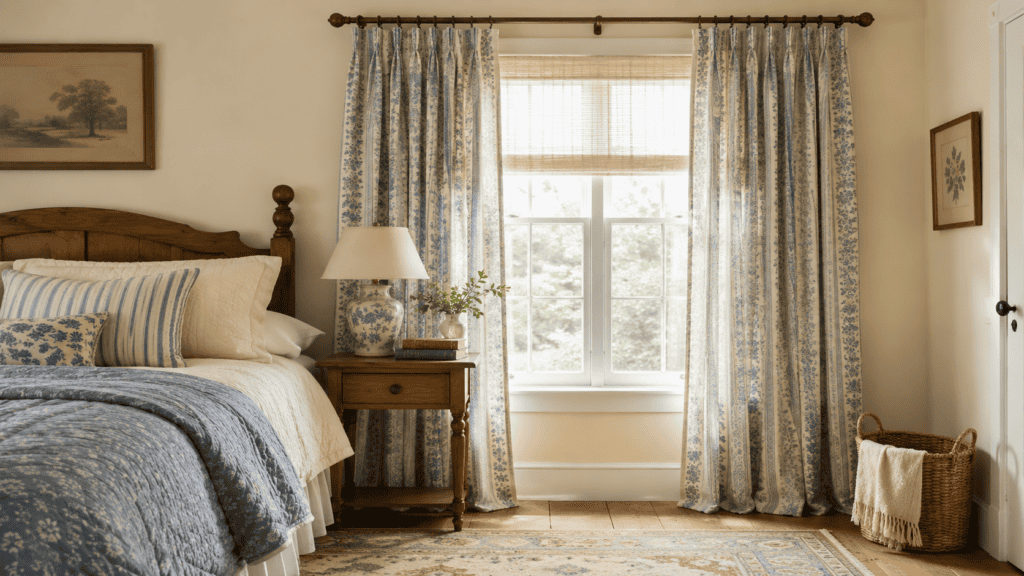
Blue curtains can soften the room, add height, and introduce pattern without taking up valuable floor space. Pale linen-style panels create an airy effect, while floral or checked curtains make the bedroom feel more traditional.
Hang the rod slightly above and wider than the window frame. This placement makes the window appear larger and allows more daylight to enter when the curtains are open. Floor-length panels usually feel more finished, although shorter café-style curtains can suit a small cottage window.
Consider the wall color before choosing the fabric. Blue curtains show clearly against cream walls, while a patterned design works well in a room with muted blue paint. If the walls are already dark, use a lighter fabric so the window does not disappear.
For privacy, layer curtains over a simple woven shade or cream sheer. Meanwhile, choose warm brass, dark bronze, or wood-toned hardware instead of shiny silver.
Curtains are among the easiest cozy blue bedroom ideas for renters because they create a large visual change and can move with you later.
11. Add a Blue Upholstered Headboard

An upholstered headboard adds softness, color, and comfort to the main focal point of the bedroom. Dusty blue linen, faded velvet, narrow ticking stripes, and small floral fabrics all suit a relaxed cottage setting.
Choose the fabric according to the rest of the room. A plain blue headboard allows you to use more pattern in the quilt and pillows. On the other hand, a floral headboard looks best with simpler cream bedding and a restrained striped throw.
Scale is important in a small bedroom. A very tall or heavily tufted headboard may overwhelm a narrow wall. Instead, choose a simple rounded or gently arched shape that adds character without appearing bulky.
You may not need to replace the existing bed. A fitted slipcover, padded wall panel, or fabric-covered board can produce a similar effect. Therefore, this can be a manageable weekend project.
Repeat the headboard color once elsewhere, perhaps in the rug or curtains. Avoid matching every accessory to it, since a little variation creates a more natural, collected appearance.
12. Mix Blue With Warm Wood Furniture

Warm wood gives blue rooms the balance they need. Pine, oak, walnut, and medium-toned antique finishes add depth and prevent the palette from drifting toward a cold gray-and-blue look.
A wooden bed can become the anchor of the room, while painted blue furniture adds contrast nearby. Alternatively, use a warm wood dresser beside blue walls and cream bedding. The mix feels more relaxed than a complete matching bedroom suite.
Do not worry if every wood tone is identical. Cottage rooms often look better when furniture appears collected over time. However, try to repeat the general warmth in at least two places, such as the headboard and picture frames.
A wooden blanket chest or small bench can also provide practical storage. For more ways to combine attractive furnishings with everyday function, practical storage ideas offer useful solutions for keeping bedrooms and other rooms organized.
If the bedroom is small, choose furniture with visible legs and avoid too many dark, heavy pieces. One substantial wooden item may be enough to ground the room while leaving the remaining space visually open.
13. Add Faded Red or Buttery Yellow Accents

A small amount of faded red or pale buttery yellow can make a blue bedroom feel warmer and more personal. These accent colors often appear naturally in vintage rugs, floral fabrics, old quilts, and botanical prints.
Begin with one small piece. For example, add a red-and-cream cushion, a yellow ceramic lamp, or a quilt with tiny rust-colored flowers. Then repeat the accent once elsewhere so it does not look accidental.
The key is restraint. Blue should remain the dominant color, while the warmer shade acts as a supporting detail. Too many bright accents can make the room feel restless, especially if the walls and bedding already include several patterns.
Muted sage can serve a similar purpose when you prefer a quieter palette. A small vase of greenery or a floral print with sage leaves adds softness without introducing another strong color.
These combinations are especially helpful when decorating with inherited pieces. An older multicolored quilt may work beautifully in a blue room when one or two of its shades are repeated in nearby accessories. If you think creatively, there are many more cozy blue bedroom ideas.
14. Create a Small Blue Bedroom Reading Corner
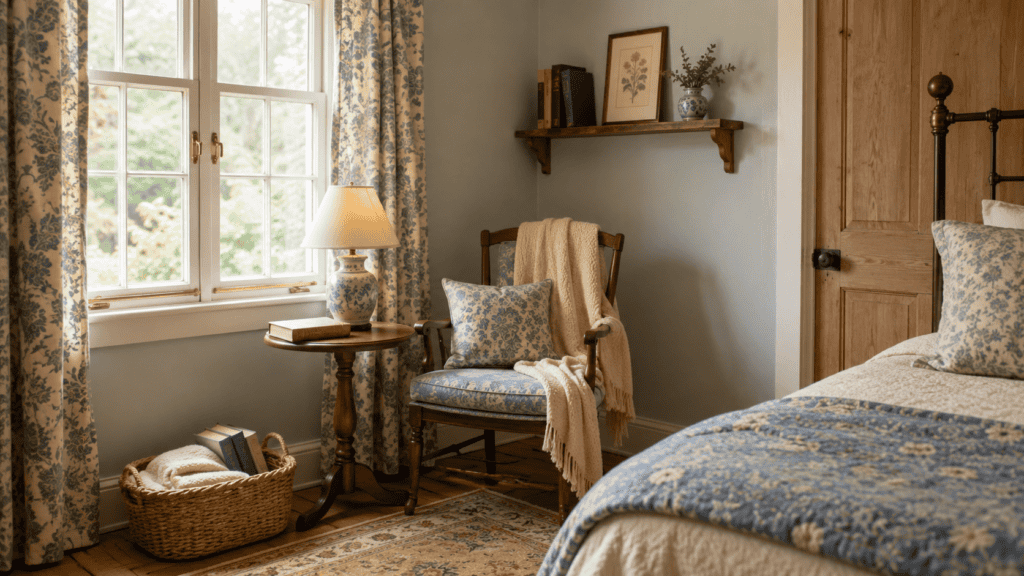
A reading corner can make a bedroom feel more personal, even when the available space is limited. Place a small wooden chair near a window, or choose a compact upholstered chair in dusty blue.
Add a floral cushion, a warm lamp, and a folded throw. A tiny side table can hold a book and cup, while a basket underneath stores current reading material. If you keep the arrangement simple so it does not become another cluttered surface, it becomes beautiful cozy blue bedroom ideas.
Vertical space is useful in a small room. One narrow shelf above the chair can hold a few books and a framed botanical print without taking up floor area. However, avoid filling the entire wall, since open space helps the corner feel restful.
Readers who enjoy creating quiet spaces may find more inspiration in cozy home library ideas, especially for arranging books, lamps, and comfortable seating.
If a chair will not fit, use a padded bench at the foot of the bed or create a comfortable spot with pillows near a window. The goal is to establish a small retreat, not to force extra furniture into the room.
15. Finish With Collected Blue Accessories
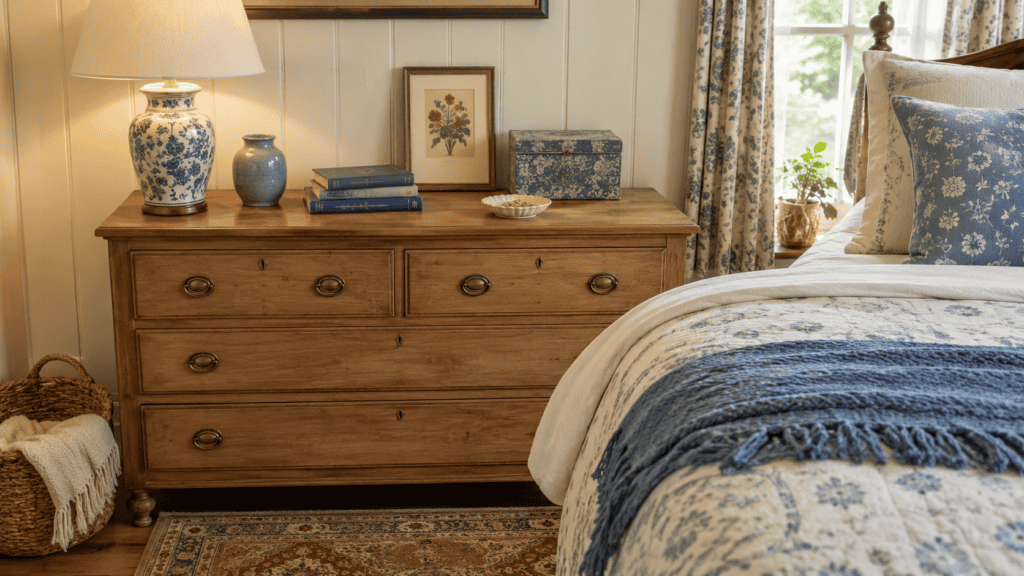
Small accessories can complete the color story without making the bedroom feel cluttered. Consider a blue ceramic vase, patterned lampshade, fabric-covered box, framed floral print, or short stack of blue-bound books.
Choose pieces that are useful or meaningful whenever possible. A ceramic dish can hold jewelry, while a decorative box can hide chargers or small personal items. Therefore, the accessories add character and help the room function.
Vary the shapes and heights, but keep the number of objects limited. On a dresser, one lamp, a framed picture, and a small vase may be enough. Similarly, a bedside table should retain space for a book, water glass, or other everyday needs.
Repeat the main shade in two or three places across the room rather than clustering everything together. This creates visual movement and makes the palette feel balanced.
Most importantly, leave some surfaces partly empty. A collected bedroom does not require every wall, shelf, and table to be filled. Intentional open space allows the pieces you love to stand out.
How to Choose the Right Shade of Blue
The right blue depends on the bedroom’s light, flooring, furniture, and existing fabrics. A paint color that appears soft in a bright store may look gray, green, or much darker in your home. Therefore, testing the shade in the actual room is essential.
Pale blue can brighten a shaded bedroom, but a very cool version may feel chilly beside gray flooring or stark white trim. Dusty blue is often more forgiving because its muted undertones work well with cream, aged wood, and floral textiles. Denim blue feels casual and grounded, while blue-gray creates a quieter, more tailored background.
Muted teal-blue has a touch of green, so it pairs naturally with warm wood, botanical prints, and sage accents. However, it can shift noticeably depending on the light. Softened navy offers the most drama and works beautifully behind cream bedding or on a painted dresser.
Room direction also matters. North-facing rooms may make blue look cooler, while warm afternoon light can bring out green or softened gray undertones. Dark wood floors often strengthen deeper shades, whereas pale flooring may make the same color feel brighter.
Paint large sample boards rather than relying on tiny swatches. Move them beside the bed, window, dresser, and darkest corner. Then observe them in the morning, afternoon, and evening with both natural and artificial light.
When comparing cottage bedroom colors, consider the fabrics you already own. The best shade should support your quilt, curtains, rug, and furniture rather than requiring every item to be replaced.
Cozy Blue Bedroom Ideas for Small Rooms
Cozy blue bedroom ideas can work beautifully in a small room, but first decide whether you want an airy appearance or a more enclosed, cocooning retreat. Both approaches can be successful when the furniture and storage choices support the goal.
For a lighter look, use pale or dusty blue on the walls and keep larger bedding pieces cream. Add deeper color through a folded throw, curtains, or patterned rug. Furniture with visible legs allows more flooring to remain in view, which helps the room feel less crowded.
For a snug effect, place softened navy or deep denim behind the bed and leave the remaining walls lighter. Warm bedside lamps, cream textiles, and a small vintage-style rug will prevent the dark wall from feeling harsh.
Use vertical space carefully. A narrow shelf, tall dresser, or wall-mounted lamp can provide function without using additional floor area. However, avoid filling every wall with storage because visual crowding can make the room feel smaller.
Mirrors can reflect light, but place them where they will reflect a window, lamp, or attractive part of the room rather than clutter. Meanwhile, keep bedside and dresser surfaces mostly clear.
Color can come from textiles when painting is not possible. Curtains, pillow covers, a quilt, and a rug create a noticeable palette without changing the walls. For more ways to make a compact room comfortable and practical, small space decorating ideas can help you use limited square footage more thoughtfully.
How to Make a Blue Bedroom Feel Warm
Blue feels warmest when it is surrounded by creamy neutrals, natural texture, and gentle lighting. Begin by replacing stark white with ivory, oatmeal, or warm cream. These shades soften the contrast and make faded blues look more relaxed.
Warm wood is equally important. A wooden bed, antique dresser, woven basket, or medium-toned frame adds depth that gray furniture cannot provide. In addition, aged brass hardware and ceramic lamps bring subtle warmth without introducing another dominant color.
Textiles create comfort through both color and texture. Layer quilts, linen-look curtains, a softly patterned rug, and one knitted throw. A little faded red or pale buttery yellow can also enliven the palette. For example, use a restrained red border in the rug or a yellow floral detail in a cushion.
Lighting can completely change the room. Instead of relying only on a bright overhead fixture, add bedside lamps with warm bulbs and fabric shades. As a result, denim and navy tones appear softer in the evening.
Be careful with too much blue-gray paired with gray flooring, silver hardware, and bright white walls. That combination may feel cool and impersonal. Instead, bring in tan, cream, wood, or muted floral patterns.
Finally, include something personal and slightly imperfect. An inherited quilt, old book, framed family photograph, or painted chest makes the bedroom feel lived in. These meaningful pieces are often what transform a coordinated color scheme into a truly comfortable room.
How to Decorate a Blue Bedroom Without Replacing Everything
You can create a noticeable change without purchasing a new bed, dresser, or complete bedding set. Start with the easiest removable elements and build the palette gradually.
Changing pillow covers is often the fastest update. Combine one floral, one stripe, and one solid blue cushion on existing cream bedding. Then add a folded throw at the foot of the bed. These small layers establish the color direction immediately.
Next, consider one larger textile. Blue curtains or a vintage-style rug can influence the entire room without requiring paint. Removable floral wallpaper is another renter-friendly choice, especially behind the headboard or inside a small alcove.
Painting one small piece of furniture may be enough. A bedside table, stool, or plain dresser can introduce dusty blue while allowing the rest of the room to remain unchanged. Replace the knobs with aged brass or dark vintage-style hardware for a more finished look.
Lampshades are also easy to update. A cream shade with a blue floral pattern can connect existing wood furniture to the new palette. Meanwhile, blue-and-white ceramics, old books, and framed botanical art can bring color to a dresser or shelf.
Work with what you already own rather than trying to match everything. For additional inspiration, small bedroom ideas for a cozy vintage home can help you combine familiar furniture, layered fabrics, and collected details. A gradual approach often produces a more natural result than replacing the whole room at once.
Final Thoughts
Cozy blue bedroom ideas can range from pale and airy to rich and cocooning. However, the most inviting rooms usually share the same foundation: warm cream, natural wood, soft lighting, layered textiles, and a few collected pieces that give the space personality.
Begin with one manageable element. You might add blue pillow covers, hang floral curtains, place a faded rug beside the bed, or paint a small bedside table. Then repeat the shade once or twice elsewhere so the room feels connected. There is no need to introduce every idea at the same time.
As you build the palette, pay attention to warmth and balance. Dusty blue and denim work beautifully with quilts, baskets, aged brass, and botanical prints. Softened navy can create depth, while faded red, pale yellow, or muted sage adds gentle contrast.
Most importantly, allow the bedroom to evolve. A collected room does not need a complete matching furniture set or perfectly coordinated fabrics. In fact, slightly different patterns, wood tones, and shades of blue often make the space feel more authentic.
Choose details that support both comfort and everyday use. Keep the bedside table functional, store extra textiles neatly, and leave a little open space on dressers and walls. As a result, the bedroom will feel peaceful rather than overly decorated.
With thoughtful color choices and familiar cottage materials, blue can become much more than a calm backdrop. It can help create a warm, personal retreat that feels settled, useful, and welcoming.